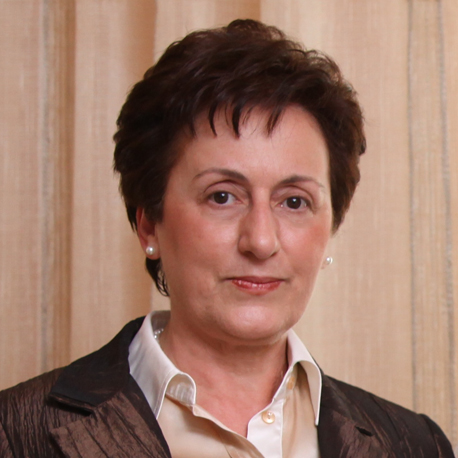
 Prof. Helen Karatza,
 The Aristotle University of Thessaloniki,
Greece
Title: Resource Allocation and Application Scheduling across the Cloud–Fog–Mist Continuum: The Role of Modeling and Simulation
Abstract
The rapid growth of the IoT, cyber-physical systems, and AI-enabled edge applications is reshaping
the computing landscape and challenging traditional cloud-centric architectures. The explosion of
distributed data, together with increasingly stringent requirements for low latency, reliability,
privacy, and energy efficiency, has accelerated the evolution toward the cloud–fog–mist computing
continuum, where computing resources are seamlessly orchestrated across cloud infrastructures and
edge nodes.
This keynote explores the challenges and emerging solutions for resource allocation and application
scheduling across the cloud–fog–mist continuum. It presents contemporary scheduling and
orchestration techniques that optimize resource utilization, latency, energy consumption, and quality
of service to meet the dynamic requirements of real-time applications.
The keynote also highlights the pivotal role of modeling and simulation as indispensable tools for the
design, analysis, and evaluation of cloud–fog–mist systems. By providing a cost-effective, scalable,
and risk-free environment, simulation enables the assessment of alternative resource management
and scheduling strategies before their deployment in real-world infrastructures. It supports the
evaluation of system performance, scalability, and resource requirements, while facilitating the
analysis of trade-offs involving latency, energy consumption, security, privacy, and operational cost.
Ultimately, modeling and simulation accelerate the development of innovative scheduling algorithms
and resource allocation policies, reducing development risks and supporting informed decision-
making for the next generation of distributed computing systems.
Bio
Helen Karatza (senior member of IEEE, ACM, SCS) is a Professor Emeritus in the Department of
Informatics at the Aristotle University of Thessaloniki, Greece. Dr. Karatza's research interests
include cloud, fog and mist computing, energy efficiency, fault tolerance, resource allocation,
scheduling algorithms and real-time distributed systems. Dr. Karatza has authored or co-authored
over 270 technical papers and book chapters. She has received the ACM SIGSIM Distinguished
Contributions Award 2025. She is included in the list of the world’s top 2% of scientists (Stanford
University rankings), and also in the 12th edition of the Research.com best computer science
scientists ranking list, 2026. She served as an elected member of the Board of Directors at Large of
the Society for Modeling and Simulation International. She also served as chair and keynote speaker
at international conferences. Dr. Karatza is Senior Associate Editor of the Elsevier journal
“Simulation Modelling Practice and Theory”, an Editor of “Future Generation Computer Systems” of
Elsevier, and the Topical Editor for Edge Computing of IEEE Transactions on Services Computing.
She was Editor-in-Chief of the Elsevier journal “Simulation Modelling Practice and Theory”, Editor-
in-Chief of “Simulation Transactions of The Society for Modeling and Simulation International”,
Associate Editor of “ACM Transactions on Modeling and Computer Simulation” and Senior
Associate Editor of the “Journal of Systems and Software” of Elsevier. She served as Guest Editor of
multiple Special Issues in international journals.
 Dr. Marica Amadeo
 University of Messina,
Italy
Title: Toward Semantic Digital Twin Networks: From Digital Representations to Collective Intelligence
Abstract
Digital Twins (DTs) are increasingly emerging as a key technology for building smarter worlds,
bridging physical systems with virtual representations and AI-driven decision-making. Originally
conceived as digital counterparts of physical entities, DTs are evolving into interconnected
ecosystems capable of sensing, reasoning, and collaborating across distributed cyber-physical
environments, where knowledge must be discovered, shared, and exploited across administrative
and technological boundaries.
This keynote explores the emerging vision of Semantic Digital Twin Networks, where distributed
DTs become active participants in collective intelligence processes through inter-twin
communications. In such environments, semantic-aware mechanisms can enhance interoperability
and enable DTs to exchange information and services based on meaning rather than exact
representations, opening the door to more effective cooperation across heterogeneous systems.
Key building blocks of this vision will be presented, including service-centric inter-twin
communications, collaborative sensing, and semantic intelligence mechanisms for knowledge
exchange, spanning application scenarios such as intelligent transportation systems and affective
healthcare.
Finally, the keynote outlines open research challenges toward large-scale Semantic Digital Twin
Networks, including semantic interoperability across heterogeneous DTs and the evolution from
data exchange to knowledge-centric interactions. It also discusses the potential role of Large
Language Model-based agents in querying and reasoning over knowledge extracted from
distributed DT observations, creating new opportunities for collective awareness and real-time
decision-making.
Bio
Dr. Marica Amadeo is a Tenure Track Assistant Professor in Telecommunications at the University
of Messina, Italy. Her research interests include Information-Centric Networking, Edge Computing,
and Digital Twins. She has co-authored more than 90 peer-reviewed publications in leading IEEE
and Elsevier journals and international conference proceedings. She was included in the IEEE
ComSoc 2022 Top Ten N2Women Rising Stars in Networking and Communications list and has
been ranked in the “Top 2% World Ranking of Scientists” for the years 2019–2024. She serves as
an Associate Editor for Elsevier Computer Communications, IEEE Transactions on Mobile
Computing, IEEE Transactions on Communications, IEEE Transactions on Network and Service
Management, IEEE Communications Letters, and MDPI Telecom. She also serves as Vertical Area
Editor for IEEE Internet of Things Magazine. She was recognized as an Exemplary Editor for IEEE
Communications Letters in 2023 and for the IEEE Internet of Things Magazine in 2024. Previously,
she served on the Editorial Board of Elsevier Vehicular Communications, Wiley Transactions on
Emerging Telecommunications Technologies, and Frontiers in Communications and Networks.
Additionally, she has been a Guest Editor for Special Issues in IEEE, Elsevier, Wiley, and MDPI
journals. She is actively involved in the organization of several international conferences, serving in
roles such as track chair, publicity chair, and tutorial chair.
